Ep. 1 Demystifying African Foods As Unhealthy
Welcome to the first episode of the Destiny African Market(ing) Podcast! Join us for an eye-opening conversation that challenges everything you thought you knew about African cuisine.
Destiny African Market and Taro, formerly Best Body Africa explore the incredible flavors AND nutritional benefits of West African foods. It's time to change the narrative around African cuisine, moving beyond stereotypes to celebrate the rich nutritional heritage, diverse ingredients, and wellness wisdom embedded in traditional West African cooking.
Featured Guests:
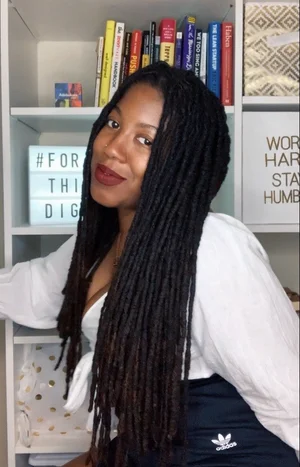
Bryanne Hackman - Certified Nutrition Coach and Founder of Best Body Africa
Bukky Ajao - Marketing Director, Destiny African Market
What You'll Discover:
The nutritional powerhouses hiding in traditional African ingredients
How West African cuisine supports balanced, healthy eating
Breaking down myths and misconceptions about African food
The role of African markets in community health and cultural preservation
Practical tips for incorporating African superfoods into your diet
Why traditional African cooking methods preserve nutrients
Topics Covered: African cuisine, West African nutrition, Nigerian food, healthy eating, cultural food heritage, African superfoods, nutrition coaching, food as medicine, Jollof rice, egusi, traditional cooking, Boston African market, wellness, community health
Podcast Transcript
Introduction: Welcome to Destiny African Market(ing) Podcast
Bukky: Okay. Hey y'all. Hey everybody. Hello.
Thank you so much for joining this live with us. Welcome, everybody that's coming into the room. My name is Bukky. I'm the marketing director for Destiny African Market, and we are just so excited to have Best Body Africa here today. Um, we have been big fans over the years ever since PlantainGate, which we'll get into in a moment.
And so we're really happy to have you here today. Um, today we're gonna be talking about demystifying African foods as unhealthy. Um, you know, ever since Destiny opened back in November of 2021, something that we realized as customers would come in, they would, you know, look around, they would leave. And you know, we started asking people like, what's going on?
Like, why did you like, look around, read ingredients, and why did you leave? And you know, people were just like, it just doesn't seem like anything in here is healthy for me. And we found that so disturbing. 'cause we know that African foods, especially since 90% of our products come directly from the country that we are promoting.
So from Nigeria, from Liberia, from Ghana, we have, you know, super foods from Zimbabwe. We know that our food is actually healthy. And we wanna kind of talk about that today. So I'll give the floor to you to introduce yourself, and then we have some questions that we love to get into. Absolutely. No, thank you very much.
Meet Bryanne Hackman: Certified Nutrition Coach Specializing in African Foods
Bryanne: Um, and I'm a huge fan of yours as well, and I've been seeing what you guys have been doing for the community trying to spread the word about African foods as healthy. And so I really, really appreciate you being part of the course. So I guess just to introduce myself, so my name is Brianne Hackman and I am a global health strategic.
So I implement projects with international organizations or nutrition. But most importantly, and I guess the reason why you're here is I am a certified nutrition coach with a specialization in African foods, and I'm the founder of Best Body Africa, which is a community of people that are trying to achieve their best body, whether it's their health or their weight management goals, while still enjoying delicious and nutritious foods from the African continent.
And I mean, I guess. The main targets are, you know, people on the continent, people within the diaspora, but also people who are looking to explore different flavors, um, and looking for the, you know, nutritious foods to add to their diets. And of course, the African continent is hope to many of the nutritious foods.
And just to say, I'm from Ghana, um, and I'm currently living in the uk, so yes, yes, my love and, you know, passion for Guinea and food as well as well has really like led me to, you know, start. This community and really nurture the community to embrace the transformational power of their foods, um, just for the health so that they can nourish and thrive.
So yeah, that's me. I'm so happy to be here. Thank you so much. Of course, of course. We're gonna get right into this questions, y'all. We only have 25 minutes. Um, for this, we're keeping this short and sweet and we hope to continue this series 'cause we really want people to know that you don't have to give up your cultural foods to have a healthy lifestyle.
PlantainGate: How West African Nutrition Facts Went Viral
Bukky: In fact, you probably should, should stick with our diet because you'll probably be better off. And so first things first, as I said before we met you and, um, discovered, um, best body Africa. Through the plantain Gates situation, which happened, I don't know if it happened in 2020 or 2021. Please our audience a little bit more about that and you know, we'd love to get into that discussion.
Bryanne: Sure. So, absolutely. So yeah, that was probably one of our first viral moments, I guess. Mm-hmm. So for context, so a lot of our community. Um, are mainly people from the Africa continent who, you know, in the global health and wellness space, there's not enough data on the nutrition stats of our food. So people don't know the calories, the protein, the carbs, the fats within our foods, and for fitness people like ourselves who, you know, try to track our.
Nutrients, you know, it, it can be very, very difficult. And part of what we did back in the series then was to really share the nutritional properties of African foods and one of them being plantain, which is our beloved, our favorite, we all love it. Mm-hmm. Um, and so we shared that video and it got reposted by another, um, influencer who she's actually been a huge fan of.
Our page actually follows our nutrition advice, and then it was twisted with the comedic angle, which. Brought a lot of attention to our page. Yeah. I think that's how a lot of people know Best Body Africa, and I think when they really step, you know, click beyond, you know, all the click baits and the video and really go onto our page, they realize that, oh wow.
The mission here is really to promote the goodness of African foods and to really provide the data and the nutrition stats to enable people to know what they're putting in their bodies so that they're. Better able to, you know, achieve their goals as a result. So that's a huge, um, part of the video and, um, I guess a huge learning as well that, you know, the internet, your content could go everywhere.
Yeah, for sure, for sure. Coming up with disclaimers before, but, you know, you never know anything could be taken to different sides of the internet, so, but yeah, no, definitely, definitely. I think, you know, I think comedic moments are oftentimes, especially as Africans, where we. How we learn and how we connect with one another.
The Challenge of Marketing African Food as Healthy
Bukky: And I found that to be very interesting. And you know, I think, um, that really opened our minds as well to the possibility of promoting African food. Right? So, um, if anybody is joining us or doesn't know me, I'm the marketing director, I destiny, and as a marketer, I have. Found it very difficult to promote our food, right?
Because not only do, um, people the world, right, the western world, perceive our food as unhealthy, we too have adopted that idea, right? And so when we talk about fufu and gams and all these things, people kind of be like, oh, I can't eat that 'cause I'm on a diet. Mm. I'm like, come again. You can't eat at goosey 'cause you're on a, on a, on a diet.
Like, explain that to me a little bit more. And so I would love, you know, for our audience to hear a little bit about some of the myths that you have encountered as a nutrition, as a nutrition coach and how you've de demystified them with, with research.
Debunking Myths: Are African Foods Actually Unhealthy?
Bryanne: Yeah. So absolutely the first myth is that African foods are unhealthy, which is a total lie, and I think it's very dangerous for to, to put a blanket statement out like that.
And also to generalize African food as one. As there are many types of African foods, many cultures. Um. The Italian diet, the Mediterranean diet is known as one of the healthiest diets in the world, if not number one. I think it shows up as number one on a lot of, um, different ranks, um, when it comes to nutrition.
Um, however, someone could say, you know, eating pasta is bad, so that means because people eat pasta, Italian Buddhist unhealthy. But that's not true. There's so much diversity in that cuisine that, you know, enables it to be recognized as a healthy food or, you know, healthy cuisine. And I think that's the same with.
African foods. I think a lots of African foods have been homogenized as one, or people only think one dish when they think of African foods. Maybe they think of, you know, a big bowl of fufu with soup or Right, right. A big bowl of plant and joo. There's so much more to it. So I think that really lies.
Firstly, in people not really knowing African foods, which is why I like to as well, you know, share some of the nutritional properties of different African foods or some underrated African foods like baab or moringa. Yes. I think the second part of this, so there's the health aspect, but then there's also the weight management aspect.
And as you, you know, weight management is highly personal and it's individualized. Mm-hmm. So what one person will eat to lose weight or to gain weight, another person may not be able to. And so. There's a lot of, you know, really personalizing that our foods, you know, to really show that they can contribute to your, as your weight management journey.
Mm-hmm. Um, and you don't necessarily have to eat the same, for example, portion of someone else. You know, it's a highly personalized, um, way of going about your nutrition. So there's a lot of learning there. Mm-hmm. To really break down African foods and the nutritional properties and how we can actually eat them to contribute towards our weight management goals.
Healthy Portion Sizes for West African Cuisine: The Plate Method
Bukky: Yeah, no. So I, you talked a little bit about portions. What do you think is a good portion? So if anybody doesn't know, make sure you go to Best Body, um, bus Body Africa and grab their guide. Their guide are very, very helpful for anybody who really needs to know how to prepare. Um, some of the things that you get from Destiny, um, and how to kind of portion them out.
But what would you say is a really good portion of, of food when it comes to our food?
Bryanne: Absolutely. Nina. Thank you. So there are. Two ways I like to think about it, and you can think about this in a plate. Um, so first of all, you can have a plate, a healthy portion, let's say for weight maintenance and just for general health is the rule of thirds.
So of course, we are all aware of our macronutrients, so the foods that we need, a larger quantities to support our health. So these are carbohydrates, proteins, and fats. And these are the foods that you can visibly portion out on a plate. And having the right balance of these foods helps with fullness. So that you don't necessarily overeat helps to manage your blood sugar cravings, um, as well as just to make sure that you have good variety in on your plate.
So when it comes to the rule of thirds, um, this would be for healthy weight maintenance, it would be to have, for example, a third of your plate as the carbohydrates. So this could be that your lot. Um, a third of the plate, as you know, stary vegetables, we still need to get in our micronutrients, and a lot of this comes through the plants that we eat, right?
Um, you know, have a good proportion of leafy greens, fruit, vegetables, whatever on your plate as well. Or this could be in. Incorporated in a soup, and then also to make room for some protein. So making sure the other third is made up of your lean proteins, whether it's animal-based or plant-based through legumes and, and, and the sorts.
If you are trying to lose weight, that balance definitely shifts. Of course, it's different for everyone, but you could use, for example, the rule of hards halves and a quarter, so maybe having half of your plate as the vegetables just to get, you know, extra micronutrients, but fewer calories from. Starchy vegetables that are also rich fiber, so it won't leave you feeling super hungry.
Mm-hmm. Having a third as the starchy carbohydrate, such as the rice, and then having the other third as protein. And of course making sure that within that you have some healthy fats in there just to increase your society levels for your fullness. Um, and also just to, to make sure it's like a delicious.
All around meals, so, right. Yeah, definitely check out. I have a whole guide on this. It's, um, within, uh, my nutrition guide, but it's the plate method and I think it just makes it easy for everyone to just look at and adopt at a daily basis. And you don't necessarily even have to track your calories or macros when you do it this way, but Porsche control really is.
African Food and Chronic Illness: Navigating Health Diagnoses Without Giving Up Cultural Foods
Bukky: Yeah. Yeah. So how have you been able to kind of, um, communicate this to the medical community? I believe you had a story about this, but we had something similar where a customer came in and literally broke down in tears. Like they did not know what to do because they were recently diagnosed with diabetes.
Right. And so I always tell people. When you're in the food business, you are also inadvertently in the health business. Yeah. And so, you know, we as a, a brand have also had to learn the nutritional value of the food. We can't just buy food and just sell it. Mm-hmm. Like, we also need to be able to explain to the consumer who is buying it.
What is going in their body. And so, yeah. Um, you know, having nutritionist, having a nutrition coach as our friends really helps because we do have a large part of our community who, um, are experiencing different chronic diseases that has changing their diet. And so what has been your experience and communicating with like the medical community to say, Hey, like if you're communicating to someone that they have this illness.
You know, don't tell them they have to stop eating everything that they know because they might not eat anything at all. And she didn't eat anything for like two days because she was just diagnosed with this life changing thing. And the doctors are telling her that she could no longer eat. You know, she can't gam, she can't eat, she can't eat ui, she couldn't eat right.
Like she couldn't eat anything and she didn't know what to do.
The Need for Diversity in Nutrition: Why African Foods Belong in Medical Recommendations
Bryanne: That's heartbreaking. And it's unfortunately a case that I've heard time and time again. Often people come to me at a point where maybe they've been recommended a certain diet plan by a dietician, or they've gotten a diagnosis and, you know, they want help to actually adapt their nutrition to sort of suit whatever lifestyle factor or illness or chronic illness that they're dealing with. And oftentimes, unfortunately, a lot of health practitioners and maybe not even it's not necessarily even their fault, but a lot of maybe, for example, dishes or recipes that are within the mainstream global realm, which a lot of the time don't, doesn't really cater to our traditional palates or our cultural palates. And so for someone who is used to eating, let's say your jollof or your fufu or your ugali, and you see this diet plan that that's just, you know, boiled chicken and broccoli, it makes you sort of think in your mind.
Wow. My foods that unhealthy. You know, you sort of associate your cultural foods with being unhealthy and you sort of feel helpless. And yeah, you feel like you have to give them up in order to lead a healthy lifestyle. This, unfortunately, is the result of the lack of diversification of the medical field and the nutrition field in practice. And one thing I tried to do is and I've already started to do this by, for example, having talks at, um, different prominent institutions, for example, with um prominent universities and their medical societies, you know, to get them to start to think about really diversifying the way they think about nutrition. It's also about having the physical representation of people of different cultures within the sector.
Um, for so long, a lot of the standards have been developed by mainly white male Westerners, you know, living in the US or the UK or, you know, other Western countries. But we need to make room in the global space for other knowledge bearers as well as practitioners who have that cultural knowledge. And without that inclusion, we will not be able to best serve those that need the help. And you know, as you know, a lot of people of African descent, a lot of black people have, you know, higher prevalence of certain diseases, whether it's heart disease, high cholesterol or so on. And so extra attention needs to be paid to our communities, and that needs to be done through extensive representation across the board, from the medical field to personal trainers to nutritionists. You know, we need that representation.
Marketing African Food: Comparing Puff Puff to American Donuts
Bukky: Absolutely. And I think that that would, um, if we can democratize that to across, you know, education and all those things and even took to marketing. Right. Because as a marketer, we have the power. And as a business, we have the power to influence what people buy, what they consume, what they think about things. And so that's really important.
You know, one thing, um, we oftentimes do is our puff puff pop ups. So we have pop ups where we serve, you know, um, puff puff and people are like, oh, that's unhealthy, that's a donut. And it's just like, well, actually, it's not. Doughnuts in America have about like twenty ingredients and puff up is simply just water, flour, sugar a pinch of salt. Right. And so I think even like breaking that down to people's like, wow, I didn't realize that the foods that I'm eating actually has so much, far more ingredients than what is simply what you're giving me. And so I definitely think there needs to be work around that. What are some foods that you find, um, have been considered unhealthy, that actually are healthy? Um, in, in your line of work? Um, as far as African food,
Surprising Health Benefits: Fufu, Plantain, and Palm Oil Nutrition Facts
Bryanne: uh, let's start with, I guess on one hand, the carbohydrates. So a lot of the stuff that we eat, such as, you know, fufu, but a lot of these foods are made with, you know, really nutritious ingredients. So cassava or plantain, fufu. Right. Loads of vitamins and minerals in there, from the B vitamins to even benefits from calcium or potassium that have all really healthy properties and, you know, helping to promote our optimum health. I didn't know plantain actually has vitamin C.
I don't know if a lot of people actually know that, but it does. Wow. Um, so I'd say a lot of the starches, on the other hand, one that I'm always trying to sort of bust myths around is palm oil. I was about to ask you that. Oh my God, that's the number one question that we get it. Yes, absolutely. And I think people need to distinguish between refined palm oil, which has been is used in mass production, you know, to produce, you know, biscuits or a lot of confectionery foods that we eat from cakes, um, which a lot of the time in its refinement has been stripped of a lot of its nutritional properties. Um, and of course, there's, you know, the environmental factor where, you know, because a lot of, you know, palm oil trees are cut down for mass production.
People equate palm oil to causing environmental devastation, which is unfortunate on one hand, but it's not a true reflection of palm oil in itself. So the palm oil that we eat, the one that's visibly red in color, as opposed to, you know, the clear one that is slightly refined, it's full of loads of vitamins and minerals and health benefits from vitamin E, which has properties like linked to skin health or, um, other factors that are, um, and healthy fats that also contribute towards, um, you know, heart health, even though it does contain some saturated fats, but it does also contain healthy fats to combat heart health. And like everything, it's all to do with the portion that you're eating. And so, yeah, that palm oil is really, really demonized in the community, right. To show people that, look, it's not all palm oil. The red palm oil is actually the healthiest that you can eat. Yes. When it comes to the palm oil, a lot of the benefits are stripped off. So yeah, don't look at your palm oil and think that it's unhealthy, right?
Destiny African Market: Partners in Your Health Journey
Bukky: I mean, you know, we try to explain that to people. They're like, oh no, I can't use that. You know, I have to use something else for my beauty. I'm like, well, the first of all, does it taste the same? And even if it doesn't taste the same, it's fine. It's just we just want people to know that it's not the devil. It's not the end of the world. Nothing bad is going to happen to you because you ate palm oil. But we do, you know, encourage people to think about their portions and to do what is best for them and recommended to them. And so, you know, as you know, and you inspired us to do this, we are going to be having, um, a resident nutrition who will help customers really think through and talk about some of the foods better. Because, you know, one thing I definitely is that we never try to assume the role of, you know, health professionals.
You know, we're not we're not health professionals. But again, if you are the food business, you are inadvertently in the health business. And so we want to make sure that our customers feel empowered to buy the food and know that they're eating for their health. Um, of course we we sell snacks, we sell sugars, we sell all those things. Um, but we just want people to know that our food is not unhealthy. Right? Like that is just such a blanket statement that we received. And that only hurts our sales. That hurts the sales of anybody who's trying to sell African food. And I noticed that in our local area, it's been really tough because people are becoming health conscious, right?
People are learning these things from BBA and from other organizations. And our, you know, people are definitely way more aware and trying to take care of their health because I just read a study that more millennials this year than ever before have been diagnosed with a chronic illness or cancer. And so millennials are really starting. We are starting to be a part of that, um, of group of people who are, um, dealing with these diseases. And I know that food is a big thing that, you know, will help us combat that. And we want people to know that destiny is a partner, um, in their health and that we care about their health and we don't want people to overconsume. And, you know, we always tell people we love food, but we love you more, right? And so that's really, really, really big. Um, just a couple more questions before we go. So I know you have to run or what is, um, something that you are planning to do in the next year around food and with Best body Africa and how can we help and support it?
Best Body Africa's Mission: Building Community Through African Food
Bryanne: So number one I guess is community. So really creating opportunities for our community to meet up in person or virtually because we have a lot of people on the African continent, in the UK, in the US, in different countries, um, that really want to connect through food. So creating those moments where people can come together, you know, on a personal level, share with their eating with each other, you know, creating, really creating that platform for people to do that.
And the second is really an in-person community. So cooking classes, you know, it's important that, you know, we actually also try our communities, try our hand at, you know, healthy cooking and healthy eating. So, um, that's absolutely one thing that I'm looking forward to. Um, and I guess, yeah, just more challenging the mainstream through through different formats, whether it's through the advocacy that we do.
Um, we also do some consulting to support other brands to diversify their offerings. And I mean, my goal is really to see African foods on any and every menu possible, you know, whether it's on nutrition apps or, um, through a HelloFresh or, you know, through other means. You know, we need some representation on global platforms. So that's really my goal, really spreading the mission globally. Um, for African foods to have a pharmacy to that global health and wellness table.
Cooking Classes and Food Preparation: Adapting African Recipes for Healthier Living
Bukky: Yeah. And very one last question. And before that last question, I also want to say we also destiny anyone here who's a part of the damn fam, we also offer cooking classes because, um, as you said, I think preparation is a big part of this as well. And I do think that when you have a chronic illness or you're looking to change your diet, I don't think you necessarily, when it comes to African food, have to give up African food. But I think preparation is something that is going to need to change. Your portions are going to need to change your mind like everything needs to change. Right. But I don't think you have to completely take it out of your diet. Um, because again, the Western alternative alternative is also not the best options either, right? So I think that's another thing that we're combating here is like, alright, they tell us not to eat our foods, but they're foods also not the best option either. Yeah. Well my very last question is when you go to an African market, what can you not leave without?
Must-Have African Ingredients: Plantain, Suya Spice, and West African Yams
Bryanne: plantain? Oh my God. I feel like that's most people's number one go to. I would also say I really like Sweet Spice. So for those of you that don't know, it's sort of a West African spice that is peanut based, that originated in Nigeria, so made from ground peanuts and spices together and people use it to season meats. And I have a honey recipe that's kind of my signature that I share. Um, and class, um, people got to try the honey and they loved it. So if you like spice, I think I'd definitely recommend some spice. Um, I would also say yam. I really do like West African yams. So the white yam, we eat a boiled a lot in my house or baked, um, like sort of a baked fries recipe. And so whenever I can hand on like a good tuber of yam, um, I absolutely will. And I guess this is like a part B to the first one. I said with plantain chips. My favorite.
Bukky: You and plantain, I love it. I love seeing all your plantain recipes. Honestly, I love I love sweet plantain. And I think that, you know, a lot of people do too. Um, so that's such a great someone said, I love, I know, I feel like that's everyone, everyone's favorite. Like, how can you not? Um, but thank you so much for your time. We really, really appreciate you. Everyone from the fam please follow Best Body Africa. They are our partner in your health. And so when you come to the store, you're coming to the market. You also have a guide for what to shop at an African market as well. Um, so again please if you are part of the fam, please make sure you follow Africa. Um, we're really grateful to have you. Thank you so much for your time. And yes, until we meet again. Um.
Bryanne: Thank you, thank you, thank you, thank you so much for the platform and continue the great work that you're doing for the community. I really appreciate it. And so anyone that's my, um, part of my community following. Follow the damn fam. Follow Destiny Africa. Um, if you're ever in the area, go to their store physically and check them out. They're doing really, really great work. Yeah. So much. Enjoy the rest of your day, everyone.
Bukky: You too. Alright. Thank you. Take care. Bye bye.