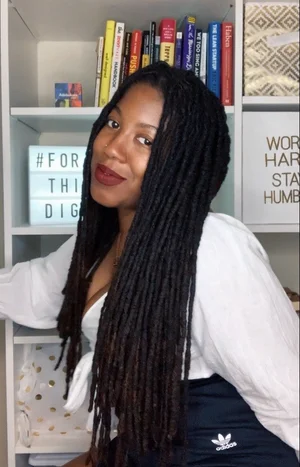
Ep. 4 Aso Ebi: When Your Customers Become Family
When Your Community Becomes Family: The Aso Ebi Story
Have you ever seen a group of people dressed in stunning, coordinated African attire and wondered what it meant? In this episode of the Destiny African Market(ing) Podcast, we explore aso ebi—the Yoruba tradition of "family cloth"—and share the story of how we brought this beautiful practice to our 2023 DAM FAM Day customer appreciation event. From the cultural significance and centuries-old history to the logistics of getting everyone coordinated, and the viral moment that followed, discover why dressing our community in matching fabric became one of the most powerful statements we've ever made about belonging, culture, and what it means to truly value your people. Whether you're curious about West African traditions or looking for authentic ways to celebrate your own community, this episode will inspire you to make belonging visible.
Podcast Transcript
When Your Community Becomes Family: The Aso Ebi Story
Introduction
Welcome back to the Destiny African Market(ing) Podcast! Today, we're talking about one of my favorite moments in Destiny's history, when a traditional Yoruba wedding practice transformed our team gathering into a viral sensation that had people stopping mid-scroll to say, "Wait, is that a grocery store or a wedding?"
I'm talking about aso ebi. By the end of this episode, you'll understand why this tradition matters, why we chose it for our 2023 DAM FAM Day, and what happened when we did.
What is Aso Ebi?
Let's start with the basics. Aso ebi comes from Yoruba—"aso" means cloth and "ebi" means family. So aso ebi literally translates to "family cloth." It's a tradition where people wear matching outfits made from the same fabric to show unity and support during important life events.
Walk into a Nigerian wedding, and you'll see it everywhere. Aunties in vibrant red and gold with matching head wraps. Uncles in flowing agbada robes from the same lace. The bride's friends in coordinated ankara prints, each interpreting the fabric in their own style—one in a mermaid gown, another in a jumpsuit, someone else in traditional iro and buba.
This isn't just about looking good for photos. Aso ebi is about something deeper—it's about belonging.
The History
The tradition stretches back centuries to Yoruba age grades—groups of people born around the same time who formed fraternal bonds and wore uniform dress to mark their connection.
By the 1920s, during a post-World War I economic boom, aso ebi became more widespread. Women's organizations would turn out to ceremonies wearing matching outfits as a visual statement: "We are together. We support this person."
By the 1950s and 1960s, aso ebi was established at weddings, funerals, and celebrations across Nigeria. When imported fabrics like lace became available, the tradition became even more elaborate. Today, it's everywhere—from Lagos to London, Houston to Toronto. It's been featured in Vogue, worn to the Grammys, and has become both a cultural ritual and a global fashion statement.
But its core meaning remains: When you wear aso ebi, you're saying, "I belong to this group. I support this person. We are family."
Why Aso Ebi Matters
Aso ebi is a visual language. At large gatherings, it lets you instantly identify groups—the bride's family in burgundy lace, the groom's friends in navy ankara, the mother's friends in coral beading.
It represents solidarity and reciprocity. There's a Yoruba saying: "Gbami nigba ojo, kingba e nigba erun"—"One good turn deserves another." When you wear aso ebi for someone's event, you're showing support that will be remembered and reciprocated.
It also demonstrates honor. When many people show up wearing your chosen fabric, it shows you're well-loved and respected in your community.
At its best, aso ebi is about joy, community, and visible togetherness. It transforms ordinary fabric into a statement of belonging.
Our Aso Ebi Vision
It's 2023, and we're planning our annual DAM FAM Day—our customer appreciation event. "DAM FAM" is what we call our community at Destiny African Market—our customers, our team, our extended family. We're a family-run business, and DAM FAM Day is when we celebrate the customers who support us all year long.
As we planned, I kept thinking about what would make it special. We wanted something that honored our culture, celebrated our community, and made everyone feel valued—not just as customers, but as family.
That's when it hit me: aso ebi.
Aso ebi is traditionally for weddings, funerals, milestone celebrations. Big family moments. So why not for our business family—our team and our customers? Why not take this tradition that celebrates belonging and apply it to the people who show up for us, who support us, who make Destiny what it is?
The more I thought about it, the more perfect it seemed. Aso ebi would visually demonstrate what we already knew: the DAM FAM isn't just customers and a team. We're genuinely connected. We support each other. We're building something bigger than transactions—we're building community.
And here's what made it even more special: for our team members specifically, we weren't going to charge them. Traditionally, aso ebi is purchased as a way of showing support. But for the team, we wanted this to be a gift.
The Process
Coordinating aso ebi is no joke. There's a reason event planners in Nigeria now specialize in it.
Choosing the Fabric: We had to select something beautiful, high-quality, and versatile enough for different styles. We considered our brand colors, what would photograph well, and what would make everyone feel amazing.
Sourcing: We had to estimate yardage for everyone. Different styles require different amounts—a man's agbada might need six yards, a woman's full ensemble six to eight yards, a simpler dress three to four yards.
Distribution: We got the fabric to our team with clear communication: "This is yours. You decide how you want to wear it. Create any style you like—traditional, modern, fusion. Make it yours." For customers who wanted to participate, we made the fabric available for purchase.
We created a WhatsApp group to share ideas and inspiration. People started asking, "Can I do a jumpsuit?" "What about a two-piece?" And our answer was always: "Yes! Just wear the fabric."
Timing: We gave everyone several weeks to find their tailor, get measured, do fittings, and prepare. And people got excited. The WhatsApp group blew up with sneak peeks: "Just got back from my fitting!" "My tailor is adding beading!" "Wait until you see what I'm doing!"
The fabric we'd distributed was already doing its work—bringing us together, creating buzz, building excitement for our celebration.
The Big Reveal
When people started arriving at DAM FAM Day, the energy was electric. Our team members, our loyal customers, our community—all dressed in our aso ebi. Because with aso ebi, there's always that moment of reveal. You know what everyone has, but you don't know how they've styled it.
And wow. The creativity was unbelievable.
Flowing maxi dresses with capes. Tailored pantsuits with dramatic sleeves. Modern two-piece crop tops and high-waisted skirts. The men showed up in classic agbadas, contemporary senator styles, dashikis paired with dress pants.
But despite all the different styles and interpretations, when you looked at us together, you saw unity. You saw family. You saw a community of people who clearly belonged to each other.
We took group pictures that looked like a wedding. Individual shots that could be on magazine covers. Candid moments of people laughing, hugging, dancing, celebrating—all while dressed in coordinated glory.
One person told me later, "I've been a customer at many businesses, but I've never felt as valued as I did that day. You didn't just tell us we're family. You dressed us like family."
That was the point. Aso ebi is an action—a visible, tangible demonstration of belonging and value.
Going Viral
We knew the photos would be good. We posted them on Instagram, TikTok, and Facebook. And the response was immediate and overwhelming.
Comments poured in:
"Wait, this is a grocery store team?! I thought this was a wedding!"
"The UNITY! This is beautiful!"
"Can I work here? I need to be part of this!"
"This is what company culture should look like!"
"As a Nigerian, this made me tear up. You brought aso ebi to America beautifully."
The posts got shared, then reshared, then featured on other pages. The TikTok video hit that sweet spot where culture, authenticity, beauty, and joy intersect—and the algorithm loved it.
Views climbed into the tens of thousands. Comments from Nigeria, Ghana, the UK, all across the US. People saying, "I'm not even West African and this makes me want to work somewhere that values me like this." People saying, "This is Wakanda-level excellence."
Young African-Americans and second-generation immigrants said things like, "My parents tried to explain aso ebi before, but seeing it like this—in an American workplace—now I get it. Now I see why it matters."
What We Learned
From a marketing perspective, that moment was gold. We gained thousands of new followers. People visited the store saying, "I saw your aso ebi video!" Our catering inquiries went up. Brand recognition expanded exponentially.
But we learned powerful lessons beyond metrics:
Authenticity Resonates: We didn't do aso ebi to go viral. We did it because it was authentic to who we are. That authenticity came through.
Culture Is Community: By honoring a traditional practice, we strengthened our bonds with our customers and invited others into it.
Your Community Is Your Brand: That event showed we're not just a store that sells African products—we're a family that lives African culture and celebrates it with our customers.
There's Hunger for This: People are hungry for cultural authenticity, for workplaces that value culture, for belonging to something bigger than a paycheck.
Representation Matters: Seeing a Black-owned, African-focused business practicing a traditional Yoruba custom with pride showed what's possible.
The Business Case
Let's talk about this from an entrepreneurship perspective. Obviously, aso ebi is specific to West African culture. But the principle is universal.
Invest in Making Your Community Feel Valued: We didn't just say "We appreciate you." We showed it in a meaningful way that honored culture and created an experience.
Culture Is a Competitive Advantage: When people see that you genuinely honor your values and your community, you stand out.
The ROI of Belonging: That aso ebi investment paid off in customer loyalty, community bonds, brand awareness, and viral marketing. You cannot buy that kind of authentic engagement. But you can create it by genuinely valuing your people.
Document and Share: Don't hide your authentic moments. Share them. The right people will be attracted to your authenticity.
Beyond the Viral Moment
That viral moment was incredible, but it wasn't the point. The point was what it meant to our community—the sense of belonging, the pride, the joy of being celebrated in such a culturally meaningful way.
Since then, aso ebi has become part of our identity. When people think about Destiny African Market, many think about that moment.
When we wore that matching fabric—our team and our customers together—we weren't just wearing clothes. We were wearing our values. We were wearing our commitment to each other. We were wearing visible proof that we're family.
And we've inspired others. African-owned businesses have reached out saying, "We saw what you did, and it made us think about how we can honor our culture." Non-African businesses have said, "This inspired us to think about what cultural traditions we can celebrate."
When you honor your culture publicly and with pride, you give others permission to do the same.
Closing
At Destiny African Market, our tagline is "Food Is Our Love Language." But aso ebi taught us that love languages extend beyond food. They include how you honor people, celebrate culture, create visible belonging, and invest in making people feel valued.
When we dressed our team in aso ebi, we were saying, "You belong here. You matter. You are family."
Aso ebi makes belonging visible. It takes the abstract concept of "we're family" and literally wraps it around you in beautiful fabric.
So whether you ever wear aso ebi or not, I hope this story reminds you of the power of honoring culture, investing in people, and making belonging tangible.
Our 2023 DAM FAM Day aso ebi experience was a statement of values—a demonstration of what we believe about family, culture, community, and belonging.
To our DAM FAM—thank you for embracing the vision and being family in every way that matters.
To everyone who felt inspired—go ahead and honor your culture. Celebrate your people. Make belonging visible.
And to everyone listening—thank you for being part of our journey. Every time you support Destiny African Market, you're part of the DAM FAM too.
Until next time, remember: Food is our love language, culture is our foundation, and community is our strength.
Want to see our viral aso ebi moment? Check out @destinyafricanmarket on Instagram and TikTok. And if you're ever in Randolph, Massachusetts, stop by 502 South Main Street. We'd love to welcome you into the DAM FAM.